
Dr. Lennie, I don’t believe there is such a thing as an “average learner.” In my classroom, some students need quiet to focus, others need to move, and some learn best by talking and working with others. How can I create one classroom that supports all these different needs—without the space feeling chaotic or having to create a separate solution for every student?
— Elementary School Teacher, Colorado
Hi, thanks to the Elementary School Teacher in Colorado. I completely agree. In fact, there is no ‘average human!’ Not only are we totally unique, but to your point often need different things at different times.
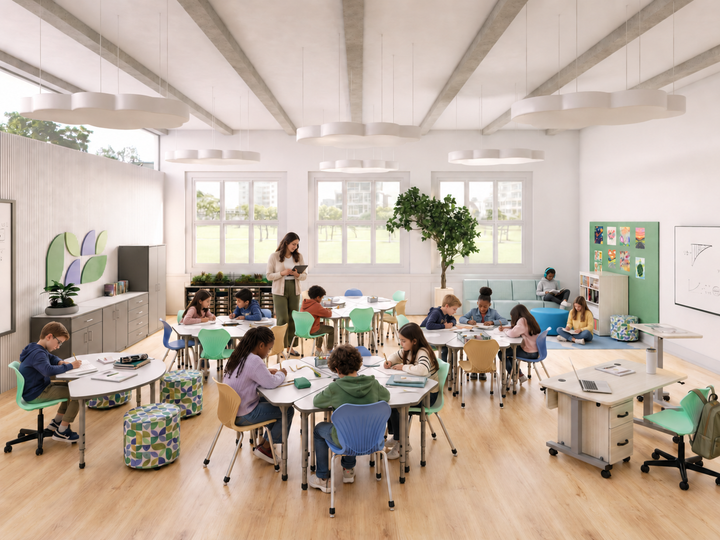
There is no “average learner”—and students may need different things at different moments.
One classroom can ‘have permission’ to do and be different things for different individuals. It takes some bit of planning. It’s about first, noticing’. If you give an assignment, or do a particular practice, notice 2 things – a) what and where learners are following your request, and b) where they differ. In post-occupancy research, we often look for what we call ‘workarounds.’ What those children are doing, where they are doing ‘it ’, is evidence of their workarounds. Whatever the place is that you want them to be is not what they innately know they need.
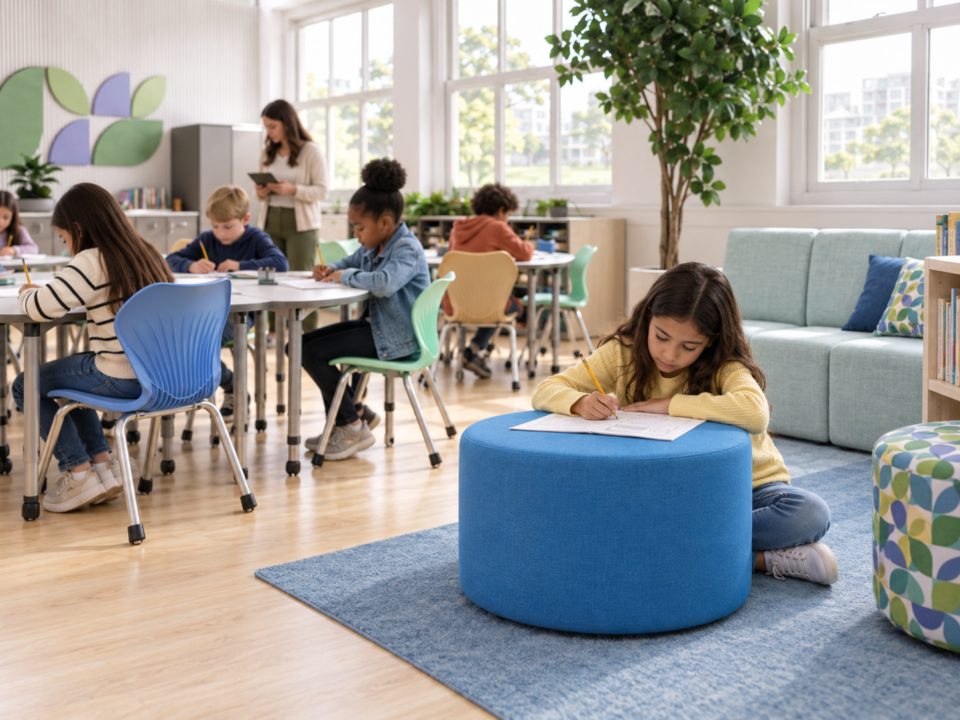
Don’t immediately correct the behavior — notice what the student may be telling you about how they work best.
