
Ask Dr. Lennie 2: Providing Levels of Choice

Marco’s “Ask Dr. Lennie” Q&A
Ask Dr. Lennie features insights from Dr. Lennie Scott-Webber, Ph.D., Marco’s Education Consultant, and a recognized leader in educational design research. Drawing on decades of academic and industry experience, she shares practical guidance on how furniture and space decisions influence learning outcomes.
Q: Allowing learners to select their own learning environment is a very empowering movement. Yet, learners at various ages have different abilities to select, self-regulate, and engage. What are age-appropriate ways to provide levels of choice that align with developmental levels for ages 5-18.
A: Hi Amy, and thanks for this interesting question. Age-appropriate decision-making actually means giving the children the ability to foster independence, self-regulation, and decision-making skills by allowing children to select from limited, safe options. Effective choices range from simple, two-option decisions for toddlers to managing routines and responsibilities for older kids, reducing power struggles, and building confidence.
Yes, student agency is empowering, and the opportunity for choice and control often starts very early – actually, as toddlers.
I like the commentary from this author:
“School-age kids (ages 6–12): Learning responsibility and consequences.”
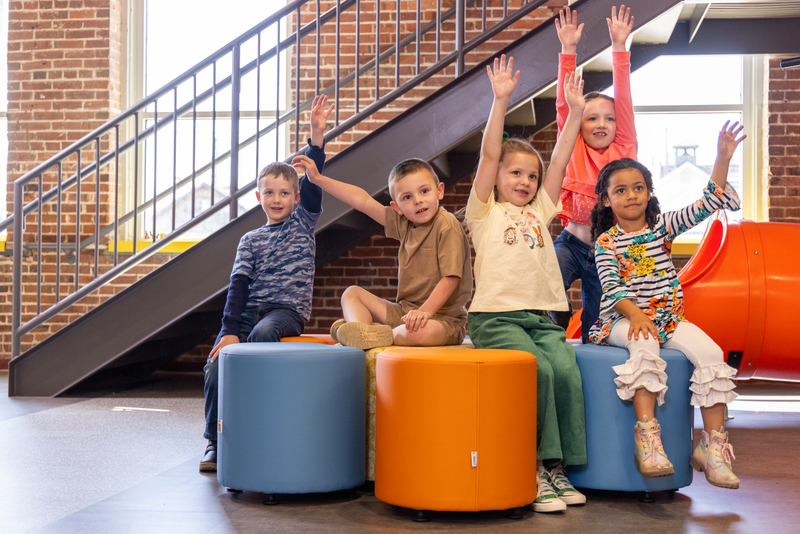
School-age kids are capable of making more thoughtful decisions — and even learning from their mistakes. This idea is where natural consequences can become an amazing teacher. Around this age, it’s a good time to give them choices that help them take on more responsibility without leaving them floundering…
Some choices you might offer:
* Clothing choices: “It’s cold outside. Do you want to wear a jacket or a hoodie?”
* Homework and time management choices: “You have about 30 minutes of homework tonight. Do you want to do it before or after we have dinner?…
How to support them mindfully:
* Let natural consequences do some of the work. If they refuse to wear a coat, they’ll be cold, and next time, they’ll most likely grab it without battling you.
* Let them make small mistakes. This idea allows them to learn from choices in a low-stakes way. If they spend all their money at once, they’ll experience what it feels like to suddenly have none left, and that’s okay.
* Encourage reflection. Ask, “How do you feel about the choice you made?” rather than jumping in with “I told you…
Teenagers (ages 13–18): Real-life decision making
Adolescence is when decision-making skills really start to matter. While they definitely still need guidance, they also need space to make mistakes — and then learn from them.
Here are some choices you can offer:

How you can support them mindfully:
* Shift from “giving choices” to coaching decision-making. Instead of just setting rules, help them think through the pros and cons of their choices. When they feel respected, they’ll be more likely to actually listen to you.
* Teach them to weigh risks and benefits. Encourage them to consider the short-term and long-term outcomes of their choices.”[1]
[1] https://www.calm.com/blog/making-choices-for-children-based-on-their-age

If we turn our attention to classroom culture recognize that not only the directives from the educator matter, but also classroom spaces are ‘cued’ with shapes/zones/colors and affordances [i.e., furnishings, fixtures, equipment, and technology]. These shaped spaces cue behaviors that are learned, but then there are subtle differences. The student/learner may have the option to sit on the floor, or sit on a pillow, or on low seating to listen to storytelling. These are small ways that encourage multiple types of ways choice built into the cueing, building confidence, as well as in a ‘controlled’ and safe manner.

An organization you may be familiar with looks at student and teacher agency and provides these important perspectives [they just don’t add in space – yet!]
https://www.oecd.org/en/about/projects/future-of-education-and-skills-2030.html
Here is hoping this perspective is helpful? Again, thanks for the question.
Ask Dr. Lennie:
Do you have a question for Dr. Lennie? Feel free to submit your question, and we may use it in a future blog article. You can also reach us by emailing
Address
5400 Doniphan Drive, Neosho, MO 64850.
List of Citations from Ask Dr. Lennie – Marco Blog
OECD. Student Agency
Olsen, B. & McIntosh, J. (2024). What is teacher agency, and how can it improve education around the world?
Commentary: The Brookings Institute. https://www.brookings.edu/articles/what-is-teacher-agency-and-how-can-it-improve-education-around-the-world/
n.a. (n.d.). Commercial Lights
NOTE: classroom horizontal average of 50 foot-candles, measured at desk height. n.a. (n.d.). Commercial Lights.
https://commercialledlights.com/blog/lighting-articles/recommended-lighting-levels/#:~:text=Classrooms%20(Typical%20Applications):%20Horizontal%20average%20of%2050,tasks%20like%20arts%2C%20blueprints%2C%20or%20lab%20work.
Determan, J., Akers, M. A., Albright, T., Browning, B., Martin-Dunlop, C., Archibald, P., & Caruolo, V. (2019). The impact of biophilic learning spaces on student success. Retrieved from
n.a. (2024). Center on the Developing Child. Harvard University
NAAVA. (2025). The science behind biophilic design: Why nature improves human connection.
nVinney, C. (2021). 7 principles of universal design to make your X inclusive. CareerFoundry.
Wohitjen, S. & Wheatley, T. (2021). Eye contact marks the rise and fall of shared attention in conversation. PNAS. Psychological and Cognitive Sciences
